Types of TCGs

A late night walk conversation got me thinking about this topic, so you get another journal post about card games. Skip if this isn’t interesting to you.

I was thinking that there’s roughly three types of card games, at least that are based on licensed properties. (We’re going to ignore games that have original properties, such as what Magic used to be, or the WARS or L5R or Force of Will games.)

The first is a card game that is designed for (and around) a specific property, and the mechanics and gameplay are so tightly integrated with that property that there’s no way you could separate them. Star Trek (particularly 1E) is probably the best example of this: You can’t slap something like Star Wars or Battlestar Galactica on the engine and have it actually feel correct (because the primary goal in those games would be combat, not exploration of planets on a spaceline).

The Austin Powers card game is another good example, because it’s the right blend of absurdity and comedy on top of a spy theme that you couldn’t put on top of James Bond (for example). The original DBZ CCG probably also belongs in this group because, while the idea of controlling a character and playing cards to attack your opponents isn’t hyper-specific, mechanics such as powering up and gaining anger to level up are very much drawn directly from the IP and are critical to the game. These mechanics wouldn’t make particular sense with anything else. (And, of course, collect 7 dragon balls as the alternate win condition.)

The second is card game “systems”, such as VS System, QuickStrike, MetaX, or UFS/Universus. (Or, yes, what Magic has become.) Even if these engines start out as somewhat specialized, that specialization often gives way (probably thanks to financial pressures or incentives) to pulling in fairly unrelated properties. (And, of course, engines like Union Arena are just designed to combine whatever the heck they want, together.)

VS System and MetaX both started as superhero games. VS’ mechanics were somewhat superhero themed, but the general idea of “fighting other characters in formation” and “playing cards to surprise your opponents” were so general that they were able (in VS 2PGCG) to slap on arbitrary other properties such as X-Files, Alien, and even pro wrestling. MetaX had an Attack on Titan set that worked with the mechanics just as well as Superman or Batman did.

Universus is probably the most interesting example of this (and one that’s particularly near and dear to my heart, because it’s one of my favorite card games), because it started out very much with a fighting game theme. The attacks were fighting game moves (and special moves). Foundations were training the characters went through. Keywords such as “combo” and “reversal” were very much fighting attack mechanics. But the engine was so good that they soon started slapping just about every property onto it, such as Yu Yu Hakusho, Godzilla, TMNT, My Hero Academia, Critical Role, and Star Trek Lower Decks. The last one, in particular, is such a skin-deep layer on top of the gameplay that it’s funny to think about, but… that doesn’t matter. The game is great. People come for the game. The theme is secondary.

The third type of game is where (the majority of) the game mechanics are designed first, and then a property is slapped on top later. I don’t know of any direct examples of this, but there are enough games with fairly generic mechanics that I’m sure there were plenty of game designers with mechanics sketched out, which just needed some slight refining and theming when a company came along with an IP for them.

I would speculate that things like World of Warcraft and Bleach fall into this category. While I’m sure these games were ultimately fleshed out specifically for the properties, there’s nothing in the gameplay that ties them to those properties. “Control a hero and recruit allies to fight another hero, with a type of card providing energy to play other cards” is the basis of both games, and that description could easily work with so many other IPs.

In any case… I dumped a big update to my defunct TCG website today, and posted an unboxing video on YouTube. More videos (including an actual episode, with actual information about a card game) will be coming soon as well.

All of this has recently been supported by “Alan is playing lots of card games, including defunct card games, with bblum”. I’m so glad to have been able to get back into UFS/Universus, and I’ve been getting a good introduction (and exposure to) Netrunner, and generally there are so many card games happening right now, in the best possible way.

Go go gadget hyperfixate.

Life is amazing.

Train! Deck! Pickles! Cards!

I neglected to mention in the last post, but we went and saw Big Boy, the historic steam train that’s running westward! Unfortunately, the experience was negatively affected by inconsiderate people and inconsistent staff: A staff member told us to move from our (ideal) photography spot, and a different group of people were allowed to stay by a different staff member, and then the first staff member conceded, but by then the spot had filled out. And we were all told to stay 25 feet away from the tracks as the train came by, so I stood reasonably far back… not only did everyone (predictably) crowd up to the tracks as the train was coming, a guy walked up from nowhere (hadn’t been waiting previously) around 30 seconds before the train arrived, and just stopped in front of me. So our almost 4 hours of finding an ideal photography spot and waiting for the train was somewhat ruined.

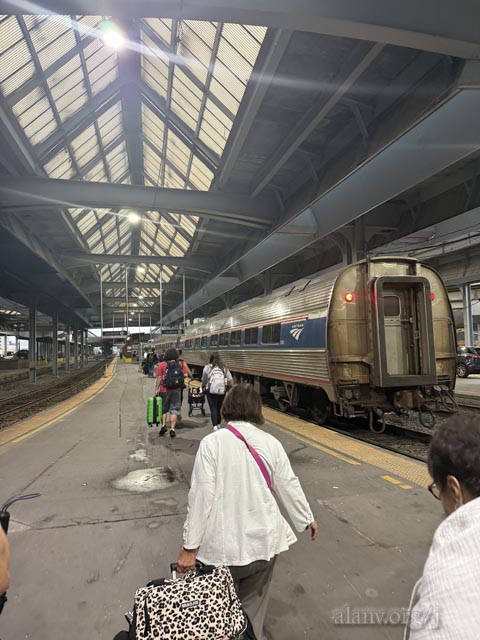
Still, here’s a train, albeit with a bunch of people in front of us.

We’ve also spent the week restaining our deck. Last time, we hired someone to do it, and they didn’t do a particularly good job, so we told ourselves we’d do it ourselves (better) the next time. Well… it’s now the next time. And the only stretch of ~5 days without rain also happened to be ~35 degree (95 F) days. So the only times we could really do work was as the sun was rising at 6 AM, plus some non-staining in the evenings, both because we didn’t want to die of heatstroke, and because the stain couldn’t be applied above 32 C (90 F) or in direct sunlight.

We made it work somehow (mostly by skipping most of the vertical rails) by waking up before 6 and doing a ton of work in the evenings (including yesterday and today, when we’re also under “stay indoors” recommendations due to the air quality due to wildfires). Ugh. (Actually, the wildfires blotted out the sun enough to allow us to stain more today than expected, given the previous temperature forecast, so maybe a win? Still, hooray for N95 masks.)

Also: It’s Picklesburgh!

Pickle soda!

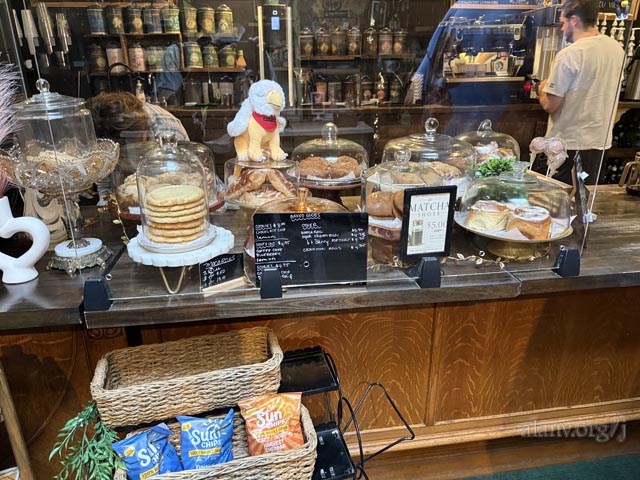
Pickle fudge! (Yes, I bought some.)

Ride the mechanical pickle!

So many pickle things, including all the usual fair food with pickles, and every-kind-of-drink-you-can-think-of with pickles added!

Also, apropos of nothing, I know nothing about the Union Arena card game but already hate it for ruining searches when I try to do research around the Bleach TCG or the Fullmetal Alchemist TCG, because practically every result now is for Union Arena rather than the separate card game. I’m waiting (and worrying) about what other TCGs will be extremely difficult to research thanks to it.

Also have I mentioned how much I dislike TCGs that don’t include a rulebook with their precon decks or, worse, their starter decks? Lightseekers is guilty of this (and ruined an attempt to play the game because I would’ve had to pull up the rules on my phone), and I can already see Sol Forge having the same problem. FMA technically has “theme decks” but they only released one set of starters in their 7-set run (with the base set) so they really should’ve made a rulebook available with any of the other three sets that had decks. Digital rulebooks are absolutely not the same, especially if you’re playing a physical card game. Boo to them.

Anyway, life is amazing.

Defunct Card Game Musings

I’ve gotten pretty deep into the world of defunct card games. The number of writeups on the website grows by the day (yet still covers probably less than 1/3 of the games in my collection), and I’ve also started a YouTube channel to present the games more directly.

But in doing so, there’s a couple things I want to talk about here in slightly more depth. (With apologies to people who don’t care about defunct card games.)

First, I’d previously written about the change in starter deck configurations over the years. There does seem to be a general trend from “starters are fully randomized” for the 90s games, to “starters are fairly fixed” (around Decipher’s golden age), to “starters have randomized parts” (like which character is included) or are blind packed. And seeing all of this across games (and being able to write about it) has been fun. Especially writing about what this does to rare pulls from boosters, and how collectors (trying to get one of everything) would be impacted.

But I hadn’t realized how bad the 24 TCG had screwed this up until I sat down to actually write about the game… they combine the worst of blind packing with a randomized set of cards, utterly destroying the game for collectors. I’m still not over how much I hate their choice of product configuration. And I’m still not over how much the game got screwed over by the decisions of the marketing team. It’s actually a good game that deserved more love that it got.

I was also surprised how much the Panini version of the DBZ TCG felt good to me (from the standpoint of collecting), but was objectively not great. All starter deck cards were starter-only rarity? Great! (Especially after being bitten by Score’s DBZ TCG’s starter decks which yielded 12 copies of a single rare card.) But it only felt that way to me because I could buy an entire box of starter decks, guaranteeing all 6 different blind-packed starters. (I’ve also become very familiar with “the coupon collector’s problem”, which gives a way to calculate how many blind-packed decks you’d need to have greater than a 50% chance at collecting every deck. (For 5 different decks, it’s 12, and for 6 it’s 15. There is of course significant variance on that.)

Second (and speaking of DBZ), I’ve run into two sets of games now that have basically “revised” themselves into an entirely new (and significantly simpler) game: Star Trek 1E to 2E, and Score’s Dragon Ball Z CCG to their Dragon Ball Z TCG.

This is honestly something I’m personally familiar with. When I created the PPA Trading Card Game in high school, I did basically no playtesting, and threw cards out there with no regard for their impact on the game (which people did actually play, after school!). It was more just a fun thing where students could collect cards with their photos on them, and maybe on the side it was also a game experience.

This is how Star Trek’s 1E and Score’s DBZ CCG feel to me. They both seem like a product geared more toward “look at these great characters and ships or moves that you know!” that just so happens to have a game around them. Both games feel like they took a significant amount of time to find their footing and try and establish actual game rules. Both saw (against all odds, as far as I can tell) serious competitive and tournament scenes. Both had serious serious flaws, and overly complicated rules, and cards that are arguably well overpowered. But both also had a ton of love from players because they felt really “true” to their source material. 1E literally felt like being in an episode of Star Trek, with game rules drawn directly from how the Star Trek universe functioned. The DBZ CCG felt like playing a DBZ character, gaining anger throughout a (fairly haphazard and improvised) fight, powering up as allies gradually joined the cause and banded together.

After the PPA TCG died (because I graduated from high school), I had a few attempts to redo the game, prioritizing the gameplay first and foremost. A few attempts were too mechanics-focused (Student Wars had a primary trait that controlled everything about the character, and was confusing to players), but I landed on what I feel like is a reasonable balance with People Wars. It lost a lot of the flavor of the original game (you’re no longer raising your GPA to get a 4.0, and you’re no longer encountering all the little weird school-specific things), but it’s much more balanced as a game. And this is what it feels like Star Trek and DBZ did with their second versions (Star Trek 2E and the DBZ TCG.)

The remakes of both of these games (Star Trek 2E and Score’s DBZ TCG) are, in my opinion, significantly better than the originals. Like, there’s absolutely no competition. Both were clearly designed first and foremost as games, with well-thought-out card types (No more 20 card types in 1E! Separate ally cards in DBZ!) and rules and faction divisions (or lack thereof). Both had balance in mind when cards were being made. Both sought to minimize rule exceptions or special rules (such as around affiliation battling for 2E, or around critical hit effects for DBZ). I enjoy playing both of these games, 2E more than 1E and the DBZ TCG more than Panini’s (later) version (which carries over a lot of what made the original feel like DBZ).

And it seems like both were fairly universally hated by players.

No, seriously. I was trying to find players who preferred the remakes (like I did). The best I could find was questions from non-players asking about the differences. There are a number of videos from players describing why the remake is “bad”, and none of their points are objectively valid. (“They got rid of anger, which ruined the game!”… one mechanic does not a game make. “In what world is this easier to understand than this?”… it’s a much more concise representation of game mechanics that I greatly prefer over a verbose statement saying the same thing, as a gamer, because fewer words on a card is better. “No more separate spacelines”… yes because that game mechanic was unnecessarily burdensome for no good reason.)

So the reaction was baffling to me until I stopped and thought about it some more. The biggest thing is that, in both games, the new games were fully incompatible with the old cards (which was, of course, a necessity if you’re completely redoing a card game’s rules). 1E and DBZ players were upset their existing collection of cards (and the real money investment that represented) became useless (and allowing some 2E cards to work with 1E didn’t help that concern). Both sets of players also felt like the new games no longer captured the “feeling” of the properties. It didn’t matter that they were better games. The players didn’t care about the actual gameplay as much as the community and “feel” of the game. And the players in both cases felt like the new games ruined that feeling. (Which, to be fair, they did, dropping the faithfulness to the source material in favor of being easier to learn and more balanced.)

In the case of DBZ, you also get insight into what happens when the company reverses course. The subsequent Panini (who’d purchased Score’s assets, and therefore rights to the original game) version of DBZ (also called a TCG, confusingly) says it’s compatible with the original CCG cards. It’s not, really (at least not without a set of hybrid rules and a bunch of special cases)… but that acknowledgement seems to have been enough. The remake seems to have done pretty well with players before Bandai took back the IP for their Dragon Ball Super card game and killed it for good.

But in general, this project has gotten me back into my old collection of games in a way that just feels really good. I love spending days digging through binders and boxes, and taking photos of things, and writing up thoughts on the history and starter deck compositions. It’s also meant I’m starting to play some of these older games again, which has been a lot of fun.

Another perk of my time being my own, rather than belong to a corporation, I guess. :)

Life is amazing.

Defunct TCG Info Site

Recently, my high school friend David said he was trying to play some TCGs to learn mechanics as inspiration to design a TCG. If you’ve followed my journal at all, you’ll know I collect and play a bunch of defunct TCGs.

The collection has grown since the last post:

In any case, this felt like a perfect opportunity, so I sent him some (lots) of game decks and rules and materials for his research.

The time I spent pulling together the decks (and, in some cases, building decks, as I didn’t have any handy) brought back my many-years-old desire to start some sort of blog about defunct card games. In particular, I’ve always been fascinated about the composition of starter decks for various games (Are they legal decks? Is a single product for 2 players? Do they include extras like booster packs? Are the cards in the deck randomized? Are the cards in the decks starter-exclusive? Are fixed decks identified on the pack or “blind” packed?), and it’s been interesting to see how the older TCGs mostly had random cards, and how that’s changed with more recent TCGs to include fixed (and often starter-only) cards.

In any case, I’ve started the blog here, on my TCGs site. It currently includes my favorite TCG (.hack//ENEMY) and one I know very little about (Super Heat), and I’ll be adding more from my collection over the next periodoftime.

At some point I might want to record some gameplay videos or such to add as well, but many of these games already have a good number of videos available on youtube, so that feels less critical.

Cruise 2: Alaska Boogaloo, and Photo Stats

(Ew. WordPress updated. I hate the new editor. Why you change things for no good reason? D:)

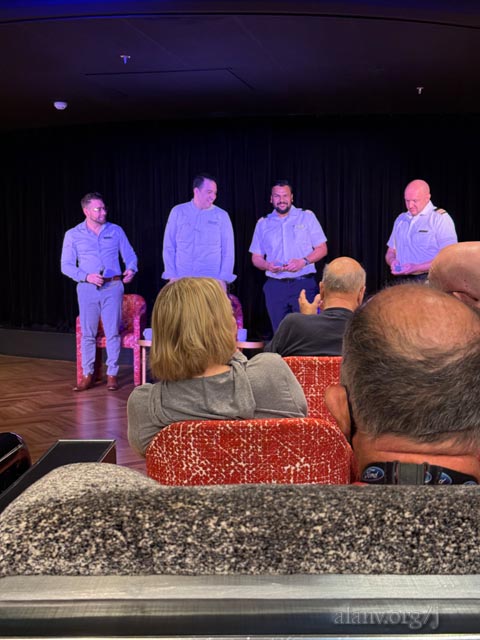
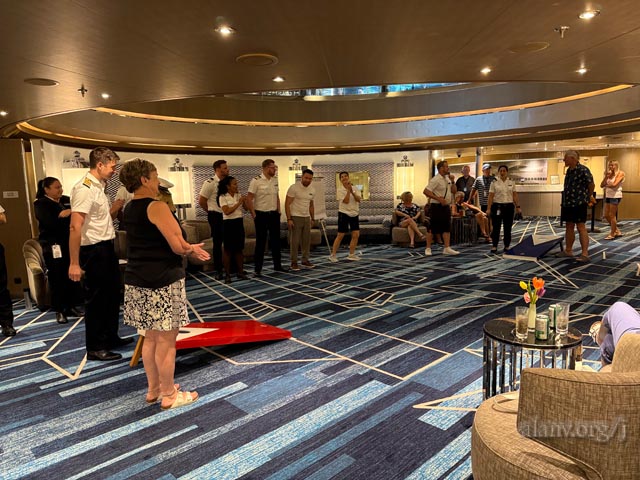
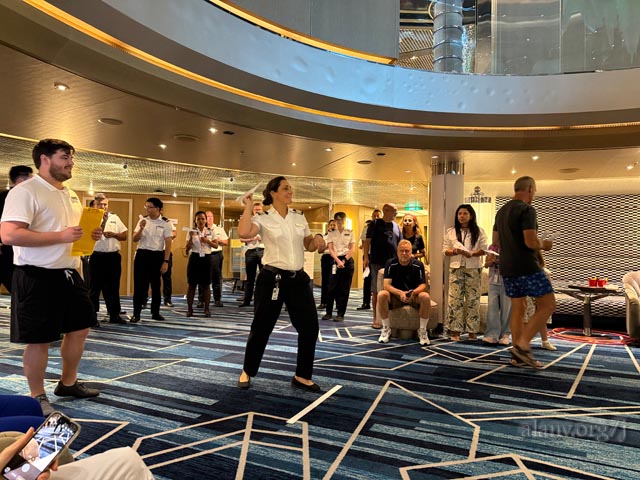
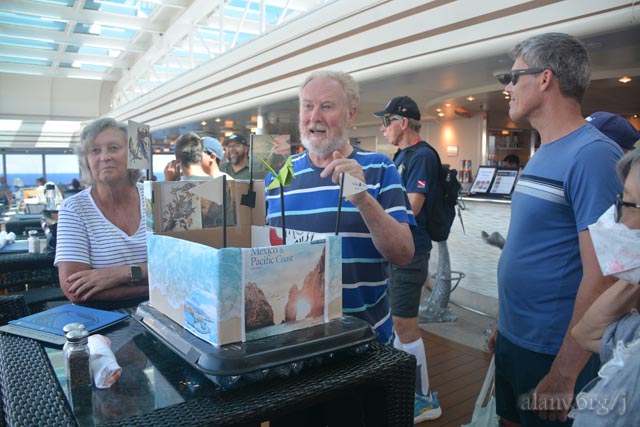
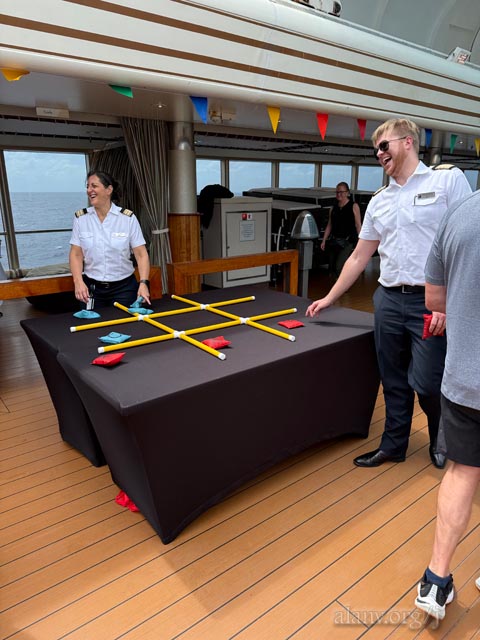
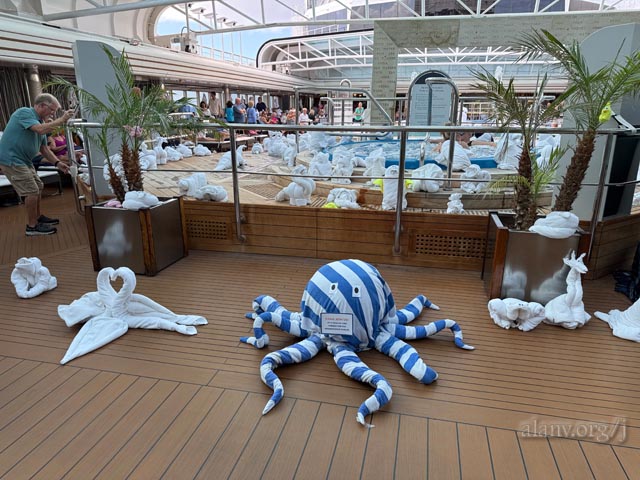
I went on another cruise, this time with friends (and my mom) to Alaska.

It was the same ship as last time, which was fun because a lot of the crew recognized us from the last time. Also, it was fun to see the differences with the crew that had changed over, including the captain and cruise directors.

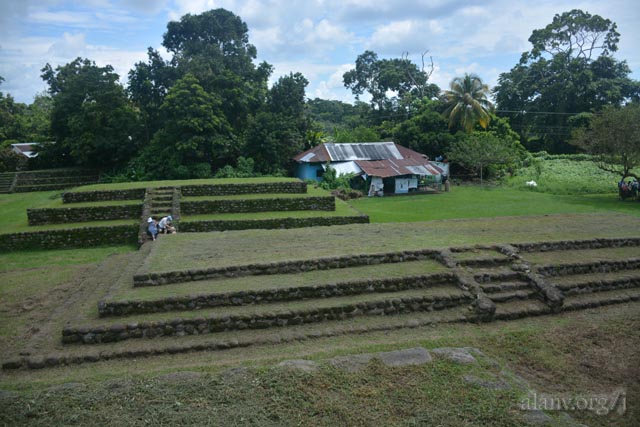
Overall, it was a great time. Alaska is gorgeous (especially Sitka), although not quite as pretty as New Zealand. Here’s the same over-the-back-of-the-ship shot as Picton, for comparison.

The Great Alaskan Lumberjack Show in Ketchikan was great.

Also the Alaskan congress wasn’t in session so we were able to walk around the building in Juneau.

The Dawes glacier was also a highlight.

Additionally, because the trip started and ended in Seattle, we got to see people there (and a Russell in Victoria), so it was a very nicely people-y trip on land, too.


But with this trip we have (finally) crossed another 25,000 photo threshhold so it’s time for more photo stats!

First, the cameras:

Intel Pocket PC camera October 6, 2000 – September 18, 2003 1077 days; 2.95 years 15,829 photos $200 14.7 photos per day 1.26¢ per photo
Olympus C3000 Zoom September 28, 2001 – December 5, 2003 798 days; 2.186 years 10,647 photos $450 13.3 photos per day 4.23¢ per photo
Kodak Easyshare DX6490 December 8, 2003 – March 17, 2006 830 days; 2.274 years 49,413 photos $500 59.5 photos per day 1.01¢ per photo
Nikon D50 March 22, 2006 – November 15, 2009 1334 days; 3.655 years 105,067 photos $570 78.8 photos per day 0.54¢ per photo
+$250 repair cost 0.78¢ per photo
106,916 shutter releases $570 80.15 shutter releases per day 0.533¢ per shutter release
+$250 repair cost 0.77¢ per shutter release
Samsung SL30 July 27, 2009 – December 1, 2016 2684 days; 7.35 years 21,616 photos $70 8.05 photos per day 0.32¢ per photo
Nikon D90 February 26, 2010 – August 20, 2022 4558 days; 12.48 years 208,758 photos $780 45.8 photos per day 0.37¢ per photo
290,157 shutter releases 63.65 shutter releases per day 0.27¢ per shutter release
iPhone 5 June 23, 2013 – December 23, 2014 548 days; 1.5 years 130 photos $0
(Provided by work)
0.24 photos per day 0.00¢ per photo
149 shutter releases 0.27 shutter releases per day 0.00¢ per shutter release
iPhone 6 Plus January 8, 2015 – January 11, 2018 1099 days; 3.01 years 4883 photos $0
(Provided by work)
4.44 photos per day 0.00¢ per photo
23,352 shutter releases 21.25 shutter releases per day 0.00¢ per shutter release
Nikon D7100
(Current)
December 2, 2015 – June 1, 2026 3834 days; 10.5 years 81,516 photos $620 21.26 photos per day 0.76¢ per photo
167,587 shutter releases 43.71 shutter releases per day 0.37¢ per shutter release
iPod Touch 6 December 2, 2017 – December 10, 2021 1469 days; 4.02 years 5610 photos $160 3.82 photos per day 2.85¢ per photo
66,398 shutter releases 45.2 shutter releases per day 0.24¢ per shutter release
iPhone 8 Plus March 8, 2018 – March 21, 2021 1109 days; 3.04 years 17,751 photos $0
(Provided by work)
16.01 photos per day 0.00¢ per photo
252,264 shutter releases 227.47 shutter releases per day 0.00¢ per shutter release
iPhone 12 March 26, 2021 – March 19, 2024 1089 days; 2.98 years 9291 photos $0
(Provided by work)
8.53 photos per day 0.00¢ per photo
74,656 shutter releases 68.55 shutter releases per day 0.00¢ per shutter release
moto g pure December 29, 2021 – March 24, 2024 816 days; 2.23 years 1254 photos $199 1.54 photos per day 15.87¢ per photo
6045 shutter releases 7.41 shutter releases per day 3.29¢ per shutter release
iPhone 14 March 21, 2024 – November 25, 2025 615 days; 1.68 years 16,046 photos $0
(Provided by work)
26.09 photos per day 0.00¢ per photo
75,306 shutter releases 122.45 shutter releases per day 0.00¢ per shutter release
iPhone 16 Pro
(Current)
April 14, 2025 – June 1, 2026 413 days; 1.13 years 23,989 photos $1100 58.08 photos per day 4.59¢ per photo
119,946 shutter releases 290.43 shutter releases per day 0.92¢ per shutter release
moto g power 5G – 2024
(Current)
February 4, 2026 – May 30, 2026 115 days; 0.32 years 3763 photos $140 32.72 photos per day 3.72¢ per photo
22,211 shutter releases 193.14 shutter releases per day 0.63¢ per shutter release

Photo count table (looks like I actually missed the 525,000 milestone last time and substituted the 550,000 milestone for it, so this is the corrected table):

0 25,000 50,000 75,000 100,000 125,000
October 6, 2000 January 12, 2004 October 20, 2004 April 10, 2006 April 20, 2007 December 4, 2007
1193 days 282 days 537 days 375 days 228 days
125,000 150,000 175,000 200,000 225,000 250,000
December 4, 2007 February 7, 2009 July 4, 2009 April 14, 2010 September 4, 2010 June 23, 2011
431 days 147 days 284 days 143 days 292 days
250,000 275,000 300,000 325,000 350,000 375,000
June 23, 2011 December 23, 2011 August 24, 2012 June 2, 2013 February 17, 2014 March 21, 2015
183 days 245 days 282 days 260 days 397 days
375,000 400,000 425,000 450,000 475,000 500,000
March 21, 2015 November 13, 2015 April 29, 2017 December 2, 2018 December 5, 2021 April 13, 2024
237 days 533 days 582 days 1099 days 860 days
500,000 525,000 550,000 575,000 600,000 625,000
April 13, 2024 May 14, 2025 February 5, 2026 May 30, 2026
396 days 267 days 114 days

Photos by month over time, log-y axis:

And linear y-axis:

Total photos over time:

And time between 1000 photos:

These stats are perhaps unsurprising given the number of trips I’ve taken this year (ski trip in February, cruise to Alaska and New Zealand in March, Alaska in May) in addition to Carnival in April.

Life is so full of people and travel and things right now, and it’s amazing. <3